Receive FREE SHIPPING on orders over $99 placed on the Didax website and shipped within the contiguous US. No promo code is required to receive this offer.
The order total for free shipping is calculated after any discounts are applied. Orders containing any Eureka Math, Big Ideas, Zearn, Math Perspectives, Didax Classroom and/or Investigations Kits DO NOT qualify for free shipping.
Free shipping valid ONLY on orders placed on the Didax website shipped within the contiguous US. Our regular shipping policies applies to other orders.
Receive FREE SHIPPING on orders over $99 placed on the Didax website and shipped within the contiguous US. No promo code is required to receive this offer.
The order total for free shipping is calculated after any discounts are applied. Orders containing Eureka Math Kits DO NOT qualify for free shipping.
Free shipping valid ONLY on orders placed on the Didax website shipped within the contiguous US. Our regular shipping policies applies to other orders.
Need new ideas? Looking for quick tips for teaching tricky concepts or organizing your math centers? Class Ideas is your go-to spot for inspiration, information and innovation and it’s an ideal way to stay current with the latest trends in math teaching and learning.
Share Your Ideas with Us
If there are topics you’d like us to cover or you’d be interested in being a guest contributor, reach out to us and we’ll respond. Email us at hello@didax.com
When first introduced to fractions, students in the intermediate grades sometimes struggle to make sense of equivalence and fraction operations. By helping students develop a deep understanding of the role of factors in comparison and fraction operations, we also prepare them for topics that follow and that build upon this knowledge.
Many of the tools used to introduce these early fraction concepts can also be used later to help students recognize the relationships between fractions and ratios, rates, and proportions. Fractions with Prime Factor Tiles is the perfect tool to introduce and explore these concepts.
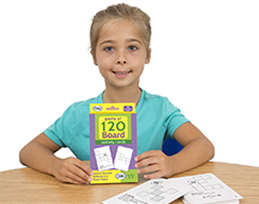
When I first started visiting elementary school classrooms, I noticed that almost all of them had a hundreds chart somewhere in the room. It might have been a pocket chart, or maybe a poster on the wall, but it was always there as an instructional tool. Then, about ten years ago, the mathematics community agreed that rather than stopping at 100, this chart should go to 120. This change would address students’ struggles with “turning the century,” helping them recognize that the number after 100 is 101 and that counting continues from there.
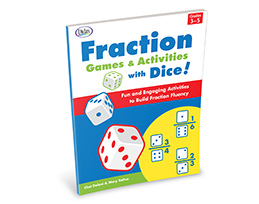
Helping students build an understanding of fraction concepts is a challenge in the intermediate and middle grades. The pictorial representation is a critical tool for making the connection between the concept and the procedure. Conceptual understanding occurs when students can explain why the procedure works, showing that they have assimilated or integrated this understanding into their basic knowledge of fractions.
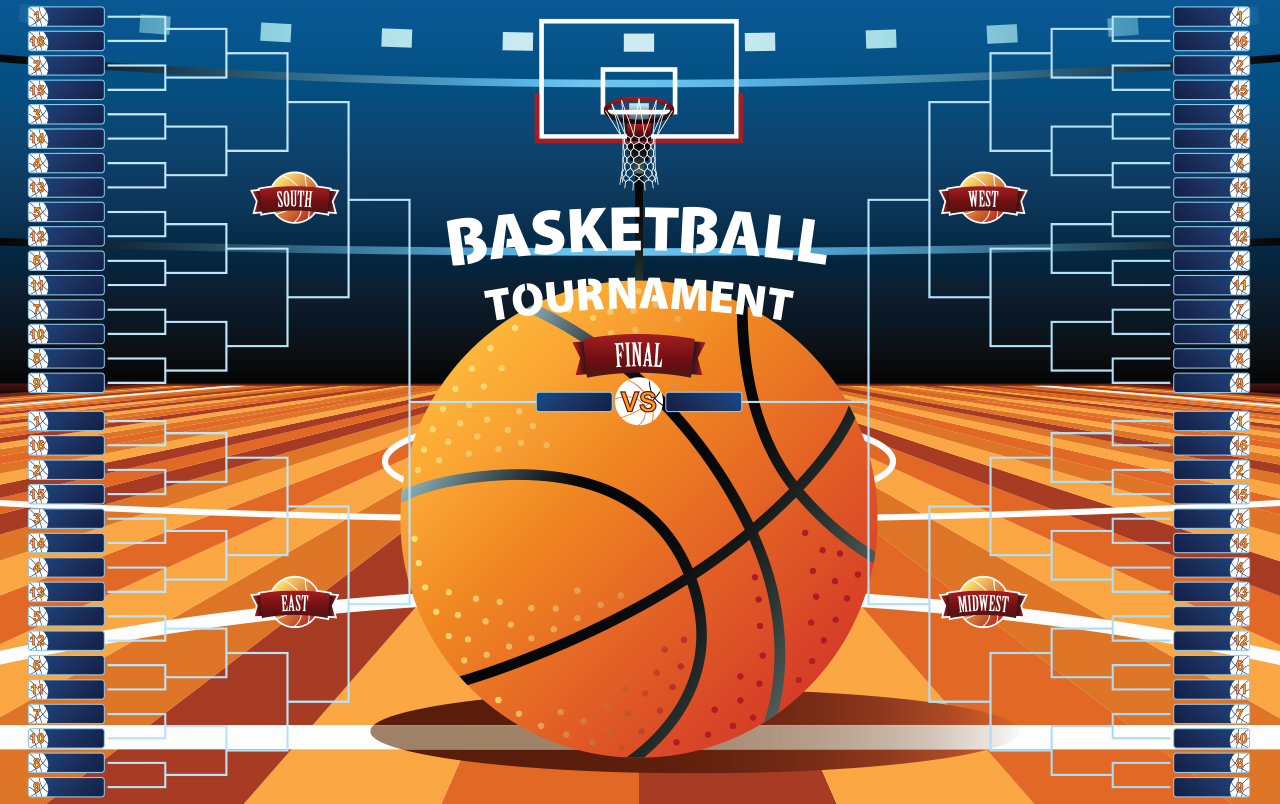
Every spring, millions of people turn their attention to what is, mathematically speaking, a tree diagram. Some think about it only when their favorite team is playing, while others are completely immersed in the annual College Basketball tradition known as “March Madness.” This frenzied tournament provides multiple opportunities to engage students in math, although we sometimes focus so narrowly on probability and statistics that students miss out on other opportunities to learn. In the spirit of the season, we’d like to share some ideas for teachers of all levels to bring March Mathness to the classroom. You can use the link below to access the activity sheets to use in your classroom. A printable tournament bracket is available here.
Many years ago, I was introduced to the elements of early Reading instruction. With my background in math, I had a lot of learning to do, but I immediately saw the value in helping students build an understanding of phonics and phonemic awareness. Using hands-on tools like Unifix® CVC and Blends cubes can accelerate students’ understanding of these critical early reading skills. Together with the new Early Phonics and Phonics activity books, these resources allow students to make concrete connections to the words around them. I’ve selected just a couple of the 211 activities available in these two books to get you started with this resource. All these activities are designed to support small-group phonics instruction using the Unifix phonics cubes and Word-Building Cards.
Watching my children and students work with manipulatives, I can see how hands-on experiences with math concepts help build a solid foundation for future learning. Often, teachers and students struggle with the transition from concrete manipulatives to a representation of the concept. Web- or app-based “virtual” manipulatives help to make this transition easier, although many teachers struggle to find a place for these tools in the classroom. Hands-on manipulatives are an excellent tool on their own, and they are even more powerful when coupled with virtual manipulatives. To support the use of these virtual tools, Didax has developed more than a dozen free virtual resources, available on our website. If you need some help getting started, read on for some ideas!
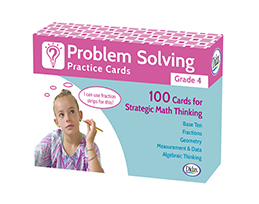
As a part of my undergraduate education, I took a class called Mathematical Problem Solving. The professor presented us with a list of problems from which we chose at least five to solve and demonstrate to the class over the course of the semester. As a part of our solution, we had to choose and identify a problem-solving strategy (from George Polya’s list of strategies) that we would then apply to the problem. This was both a good introduction to a wide range of problem-solving strategies and a powerful example of how different students see and solve problems in different ways. When I started teaching, I sometimes tried to incorporate the strategies into my instruction. The challenge was providing a variety of problems that spanned both the standards and the strategies, giving students the opportunity to practice both in a meaningful way. To help teachers address this challenge, Didax now offers Problem Solving Practice Cards for grades 3 through 5 that provide both a problem and a suggested problem-solving strategy.
Mathematics educators have recently highlighted the need for “low floor, high ceiling” tasks that lead students into rich areas of inquiry. The “Four 4’s” problem is a fairly well-known example cited by Jo Boaler and others, but such challenges are hard to develop. It is often difficult to find an exercise, game, or a puzzle that is instantly accessible at a basic level, yet also leads to the exploration of higher-order thinking and deeper mathematical insights. The PEMDice game is designed to scratch this itch. Very simple in concept and, when played in its elementary form, it is ultimately as complex and as challenging as anyone cares to make it.
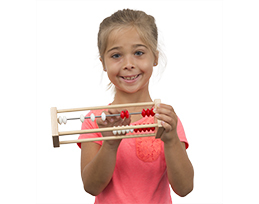
Early in my publishing career, I was working with an author on an updated book series. In the course of our discussion, he mentioned the Rekenrek, a tool for building early numeracy. This was, at the time, a very new tool in the United States even though its use could be tracked back for many years in the Netherlands. I was intrigued, but not quite sure what we could do with this tool that would help teachers enhance their instructional practice. Fast forward several years, and the Rekenrek is far more familiar. Many educators are embracing this tool with varying degrees of success. To make this implementation a little easier, Don Balka has developed two activity books for the Rekenrek: Working with the Rekenrek (with Ruth Harbin Miles) and Working with the 100-Bead Rekenrek. These books provide both teacher support and engaging student activities to help us all use the Rekenrek more effectively. If you’re looking for some ideas to get started with the Rekenrek, here are two new ideas based on these resources.
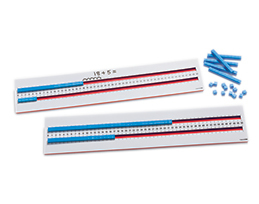
Double, or dual, number lines are an ideal "visual model" for solving mathematical problems involving equivalences, ratios, proportions, and more. Though double number lines are not mentioned specifically in the CCSS until Grade 6 (6.RP.3), they are a viable tool for mathematical understanding beginning as early as first grade.



 © 2025 Didax, Inc. All Rights Reserved.